Africa Fairtrade Convention
2011
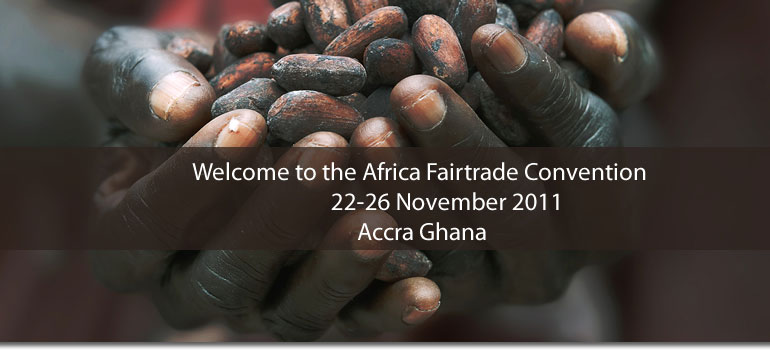
This was the official website for the 2011 Africa Fair Trade Convention. Content is from the site's 2011 archived pages.
About Africa Fairtrade Convention
The Africa Fairtrade Convention provides a platform for African small-scale producers, international traders, policy makers, partner organisations and Fair Trade stakeholders to discuss how better trade conditions can help improve the livelihoods of African farmers and workers. After the successful inaugural edition in Victoria Falls, Zimbabwe, held at the end of last year, the Africa Fairtrade Convention will this year take place in Accra, Ghana.
On Wednesday 23 and Thursday 24 November convention participants will discuss at the Fairtade Africa Forum how collaborations between all involved actors can be enhanced, resulting into more effective output and new opportunities for the different stakeholders in the supply chain – from the coffee planter in Uganda to the retailer in the UK – and beyond. Theme this year is 'Effective Trade Partnerships for Sustainable Livelihoods in Africa'. During the final day, on Friday 25 November, the African Assembly, the highest legislative meeting for Fairtrade Africa members, will convene. Non-members are invited to attend as observers.
For the first time, in parallel with the Forum and the African Assembly, a Fairtrade & Organic Expo will take place where small-scale producers, traders, partners, service providers and other stakeholders can meet to build new relationships or strengthen existing ones; where business is being done, valuable information is gathered and opportunities are being created.
Who will attend?
We expect 200 participants from across Africa and beyond, including African producers, international traders & industry professionals, policy makers, NGOs and Fairtrade partners. Representatives of the following organisations have already confirmed attendance: Kraft, Nestlé, Twin, Ofxam, International Solidarity for Development and Investment (SIDI), Fairtrade Foundation and Association for Fairness in Trade.
About us
The Africa Fairtrade Convention 2011 is organised by Fairtrade Africa. Fairtrade is an international movement that works to protect and support small-scale farmers and workers in the South. Our mission is to connect disadvantaged producers with consumers and promote trade justice. We at Fairtrade Africa are representing the African farmers in the global system. For more information, visit our website: www.fairtradeafrica.net
Social Programme
Field Trip
On Tuesday 22 November a field trip will be organized to two Fairtrade certified producer organisations near Accra. This will help increase understanding of producer realities and offer participants the opportunity to interact with producers in their environment. A small-scale cocoa farm and a fresh fruit plantation will be visited.
All convention participants – producers, traders and other stakeholders – are welcomed to attend. The trip, which will take up a full day, will start early in the morning so participants need to arrive the night before in Accra. Please make sure to confirm participation when registering for the Africa Fairtrade Convention.
Cocktails
After a hard day's work, some relaxation is in order. A cocktail reception will be organized at the end of Day 1 of Fairtrade Africa Forum (23 November) to network and get acquainted again with old friends.
Workshops
What does ‘gender’ mean in Fairtrade farms?
Fairtrade Africa is currently working in collaboration with Fairtrade International and the other Producer Networks (CLAC from Latin American and NAP from Asia) to define a gender strategy for the system. As part of this process FTA will carry out a workshop in order to get input from its members. The aim is twofold: to exchange experiences among producers on the relationship of gender and key topics like health, education, production and economy, leadership and participation in Fairtrade producer organizations (POs) in Africa and to collect inputs towards the development of a diagnostic and a strategy that allows increased gender equality within the POs in Africa and the wider Fairtrade system in general.
Who can attend: Producers
For more information contact: Marcela Guerrero Casas at [email protected]
Media training
During the A one-day training, Fairtrade producers will learn how to make the most of media opportunities. The session will include both theoretical and practical sections, whereby mock interviews are set up. After the workshop, producers will have a better knowledge of the media landscape, know how best to prepare for an interview and have learned techniques to guarantee the best results.
Who can attend: Producers
For more information contact: Veronique Verlinden at [email protected]
Fairtrade Cashew Round Table
The Fairtrade Cashew Round Table discussion will allow stakeholders to present their positions on setting a Raw Cahshew nut price as well as offer suggestions to improve the current certification model and grow the market for Fairtrade cashew.
Who can attend: Cashew producers from Africa, Asia and South and Central America. Cashew traders, processors and other interested parties including LI’s and NGO’s working directly with Fairtrade cashew producers.
For more information contact: Johanna Zimmermann at [email protected]; Benjamin Gatland at [email protected]
Expo
A Fairtrade & Organic Expo will run during the Africa Fairtrade Convention, where producers, traders, retailers, Fairtrade Labeling Initiatives and other partners can showcase their work. The Expo will also provide a networking opportunity to build stronger supply chain partnerships. Booths will be displayed in an open plan space, while isolated meeting spaces will be provided if required for interviews or discussions.
Why exhibit?
- Face-to-face power- Get first-hand market information & improve understanding of your activities/service capabilities to producers/traders/partners
- Create trust - Improve relationships with your partners which will help further build trust on both sides
- New business - Identify new business opportunities
- Unique - As the first continental-wide agricultural exhibition which brings producers and traders together in Africa, this is a unique setting to meet people and do business
- Network - Introduce your organisation to supply chain stakeholders and partner organisations, identify new value chains available in the region and establish contacts with potential producers
- Showcase - Demonstrate how you work together with Fairtrade to make a difference to the lives of African producers
- Forum Theme
Effective Trade Partnerships for Sustainable Livelihoods in Africa.
- Fairtrade & Organic Expo
The first continental-wide agricultural expo which brings producers and traders together in Africa
- Why exhibit?
Identify business opportunities and get first-hand market information.
- Convention audience
African small-scale producers, international traders, policy makers, partner organisations, Fair Trade stakeholders…
Update:
As an international trader in coffee from Africa, this was a convention I would normally attend. But a long delay at Kennedy International put me a day behind and forced a stay overnight at the airport. But as serendipity would have it, I had a most compelling evening, passing time with other stranded passengers. Even had dinner with one of my heroes, the search engine specialist Bob Sakayama. Many online businesses exist and thrive because of the technical prowess of TNG/Earthling, his NYC consultancy. We spoke for 4 hours and could have kept on going. Although I missed the 2011 Africa Fairtrade Convention, I have attended every one since. Established in 2005, Fairtrade Africa is the independent non-profit umbrella organisation representing all Fairtrade certified producers in Africa. Fairtrade Africa is owned by its members, who are African producer organisations certified against international Fairtrade standards producing traditional export commodities such as coffee, cocoa, tea, cotton, bananas, mango and non-traditional commodities including shea butter and rooibos tea. It's heartening to see how the organisation which represents over 1,050,000 producers across 33 countries in Africa has grown since its inception more than ten years ago.
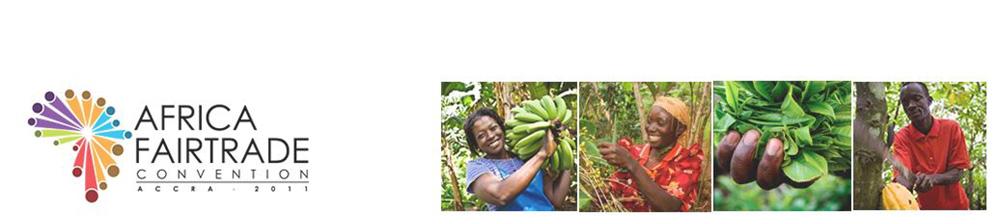
More Background on AfricaFairTradeConvention.net
AfricaFairTradeConvention.net was the official website for the 2011 Africa Fairtrade Convention, an international gathering dedicated to improving trade relationships, strengthening agricultural supply chains, and advancing sustainable livelihoods for farmers and workers across Africa. Organized by Fairtrade Africa, the convention brought together small-scale agricultural producers, international buyers, business representatives, policymakers, nonprofit organizations, and other stakeholders committed to making global trade more equitable.
The 2011 convention took place in Accra, Ghana, from November 23 to 25, following the inaugural event held in Victoria Falls, Zimbabwe, in 2010. Its central theme, "Effective Trade Partnerships for Sustainable Livelihoods in Africa," reflected the organizers' belief that lasting economic improvements required cooperation among producers, traders, retailers, development organizations, and governments. Rather than concentrating exclusively on certification or agricultural production, the convention examined the commercial relationships and institutional structures that determine how much African producers benefit from international markets.
AfricaFairTradeConvention.net served as an information and promotional resource for the gathering, providing details about the convention's objectives, participants, workshops, exhibition opportunities, field visits, and networking activities. The website also explained the role of Fairtrade Africa within the international Fairtrade movement and encouraged businesses and producer organizations to establish relationships that could continue beyond the event itself.
Today, the website is best understood as a historical resource documenting an important period in the development of producer-led Fairtrade initiatives in Africa. Its surviving material illustrates how Fairtrade Africa sought to move beyond discussions about ethical consumption toward practical business partnerships, stronger producer representation, and greater participation by African farmers in decisions affecting their livelihoods.
Origins and History of the Africa Fairtrade Convention
The Africa Fairtrade Convention emerged during a period when Fairtrade certification was becoming increasingly important to agricultural producers seeking access to international markets. African farmers supplying coffee, cocoa, tea, bananas, cotton, and other commodities often faced challenges involving fluctuating prices, limited bargaining power, transportation costs, and dependence on intermediaries. Although demand for ethically sourced products was expanding, obtaining certification did not automatically guarantee that producers would find reliable buyers or receive sufficient income to improve their living conditions.
Fairtrade Africa, established in 2005, developed as a producer-led organization representing certified agricultural producers within the international Fairtrade system. Its purpose was to ensure that African farmers and workers had an organized voice in discussions about trade standards, certification requirements, market development, and the distribution of economic benefits. The organization's activities included advocacy, training, institutional development, and support for agricultural producer organizations.
The inaugural Africa Fairtrade Convention was held in Victoria Falls, Zimbabwe, in 2010. This first gathering established a continental forum where producer representatives could meet international traders and development partners while discussing the practical difficulties of implementing fairer trading arrangements. Its success encouraged organizers to hold a second convention in Accra the following year.
The choice of Ghana for the 2011 event was especially relevant because of the country's importance in international cocoa production and agricultural exports. Ghana offered an opportunity to connect discussions about Fairtrade with the experiences of farmers and agricultural businesses operating within one of Africa's major commodity-producing economies.
The second convention also introduced a Fairtrade & Organic Expo, expanding the event beyond meetings and policy discussions to include commercial exhibitions and direct interactions between producers and prospective buyers. This addition demonstrated the organizers' growing emphasis on transforming ethical trading principles into practical economic opportunities.
The convention's historical importance is also reflected in academic research. A study examining Fairtrade narratives and political dynamics cited documentation from the November 2011 Accra convention, including material concerning Fairtrade impact assessment. This reference indicates that the gathering contributed to broader discussions about producer representation, certification, and the effectiveness of Fairtrade initiatives.
Ownership and Organization: The Role of Fairtrade Africa
The 2011 Africa Fairtrade Convention was organized by Fairtrade Africa, an independent, nonprofit, producer-led network within the global Fairtrade system. Fairtrade Africa represents organizations whose members include smallholder farmers and agricultural workers involved in producing commodities for domestic and international markets.
Unlike commercial trade exhibitions organized primarily to generate revenue for private event companies, the Africa Fairtrade Convention was designed around the interests of agricultural producers and their relationships with buyers, institutions, and development partners. Its underlying purpose was to improve opportunities for producers to participate in trade on more favorable terms.
Fairtrade Africa's organizational structure is particularly significant because producers participate in its governance. The organization is owned by its producer members, giving agricultural organizations a direct role in decisions affecting its activities and priorities. This producer-led approach distinguishes Fairtrade Africa from initiatives in which farmers are treated primarily as recipients of assistance rather than participants in institutional decision-making.
The organization's secretariat is based in Nairobi, Kenya, and its activities extend across multiple regions of Africa and the Middle East. Fairtrade Africa works within Fairtrade International, connecting regional producer interests with a broader system of certification, market relationships, and sustainability initiatives.
According to Fairtrade Africa's current organizational information, its network represents approximately 1.5 million farmers and workers across 29 countries in Africa and the Middle East. These figures reflect the organization's subsequent growth and should not be interpreted as its membership totals at the time of the 2011 convention.
Although Fairtrade Africa's responsibility for organizing the convention is established, publicly accessible historical information does not conclusively identify the original domain registrant or technical operator of AfricaFairTradeConvention.net. The distinction matters because ownership of the organizing institution and ownership of a particular internet domain are not necessarily identical.
The 2011 Convention in Accra, Ghana
The 2011 Africa Fairtrade Convention was scheduled for November 23 through November 25 in Accra, with an additional field visit arranged for November 22. The event combined formal discussions, producer governance meetings, practical training, exhibitions, and opportunities for informal networking.
Accra was a suitable location for a continental agricultural trade gathering because it is Ghana's capital and an important center of government, commerce, transportation, and international business. The city provides access to Kotoka International Airport and serves as a gateway to agricultural production areas throughout southern Ghana. Its proximity to major commercial infrastructure and agricultural supply chains made it a practical meeting point for participants arriving from other African countries, Europe, and beyond.
The convention's main activities were divided into two components. The Fairtrade Africa Forum took place on November 23 and 24, while the African Assembly convened on November 25. The Fairtrade & Organic Expo operated alongside these meetings, allowing participants to explore commercial opportunities while attending discussions and workshops.
The organizers expected approximately 200 participants, including African producers, international traders, industry professionals, policymakers, nongovernmental organizations, and Fairtrade partners. This was a projected attendance figure rather than a verified final count, but it illustrates the scale and international orientation of the event.
The convention was not intended exclusively for senior executives or institutional representatives. Its program included opportunities for farmers, producer cooperatives, agricultural workers, and representatives of smaller organizations to participate in discussions about trade relationships and economic development.
The Convention's Main Theme and Objectives
The theme "Effective Trade Partnerships for Sustainable Livelihoods in Africa" summarized the central challenge the convention sought to address: how to convert Fairtrade principles into measurable improvements in the economic security of farmers and workers.
African agricultural producers frequently operate within supply chains that involve multiple intermediaries, exporters, processors, distributors, and retailers. Each participant performs a commercial function, but the distribution of income and negotiating power can be uneven. Smallholder farmers may have limited influence over international prices, product specifications, transportation arrangements, and purchasing commitments.
The convention encouraged stakeholders to examine these relationships and identify ways to make them more effective and equitable. Discussions emphasized cooperation between producer organizations and international buyers, improved communication throughout supply chains, and the development of commercial arrangements that could support stable agricultural livelihoods.
Another important objective was strengthening the ability of producer organizations to operate as successful businesses. Access to information about markets, product requirements, certification standards, and potential customers can improve a cooperative's capacity to negotiate contracts and plan production. The convention created opportunities for producers to obtain this information directly from traders and other industry participants.
The organizers also recognized that economic sustainability depends on more than product prices. Leadership, gender equality, institutional capacity, environmental management, and participation in decision-making all influence whether agricultural communities can benefit from international trade over the long term.
The Fairtrade Africa Forum and African Assembly
The Fairtrade Africa Forum formed the central discussion component of the 2011 convention. Held over two days, it provided a setting for examining collaboration among agricultural producers, commercial buyers, policymakers, and organizations involved in ethical trade.
The forum's broad agenda encouraged participants to consider the entire agricultural supply chain. For example, a coffee producer in Uganda and a retailer in the United Kingdom may operate thousands of miles apart, yet their commercial decisions are connected through purchasing arrangements, quality requirements, certification standards, and consumer expectations. Improving communication and cooperation between such participants was one of the convention's principal goals.
The African Assembly, held on November 25, served a different function. It was described as the highest legislative meeting for Fairtrade Africa members, providing an opportunity for producer representatives to participate in organizational governance. Nonmembers were invited to attend as observers, allowing interested stakeholders to learn about the organization's decision-making processes without assuming the rights of producer members.
This combination of an outward-facing trade forum and an internal governance assembly was particularly important. It connected discussions about market opportunities with decisions about how African producers should be represented within the Fairtrade system.
The importance of this governance structure continued beyond 2011. At Fairtrade Africa's 2022 General Assembly, also held in Accra, representatives discussed market access, sustainable production, living incomes, advocacy, and organizational strategy. The organization emphasized that producer ownership and participation were central features of its institutional identity.
The Fairtrade & Organic Expo
One of the distinguishing features of the 2011 convention was the introduction of the Fairtrade & Organic Expo. Described by the organizers as the first continent-wide agricultural exhibition of its kind bringing producers and traders together in Africa, the expo was intended to create practical business opportunities alongside the convention's discussions and governance meetings.
The exhibition brought together producers, traders, retailers, Fairtrade labeling initiatives, service providers, and partner organizations. Exhibitors could present their products, explain their activities, meet potential customers, and explore opportunities for cooperation. The planned layout included an open exhibition area with booths and separate spaces for private meetings or interviews when needed.
For small agricultural cooperatives, direct contact with buyers can be particularly valuable. Producers may have limited access to international trade fairs or commercial networks, making a specialized continental exhibition an opportunity to introduce their products to companies that might otherwise be difficult to reach.
The expo also offered benefits to international buyers. Traders and retailers could learn about available agricultural products, identify potential suppliers, understand production conditions, and develop relationships with producer organizations. These interactions could help buyers assess supply capabilities while allowing producers to learn more about market expectations.
The event's commercial emphasis did not replace its social mission. Instead, the organizers presented business development as an essential component of improving livelihoods. The exhibition reflected the belief that ethical trade would be more sustainable when producers had access to dependable markets and stronger commercial partnerships.
Workshops and Professional Development Activities
The 2011 convention offered workshops addressing specific challenges faced by Fairtrade producers. These sessions provided opportunities for practical learning and encouraged participants to contribute their experiences to broader organizational initiatives.
One workshop examined the meaning of gender equality on Fairtrade farms and within producer organizations. Fairtrade Africa was collaborating with Fairtrade International and other regional producer networks, including CLAC in Latin America and the Caribbean and the Network of Asia and Pacific Producers, to develop a gender strategy for the international Fairtrade system.
The workshop encouraged producers to discuss the relationships between gender and subjects such as health, education, production, economic participation, leadership, and organizational governance. Its purpose was both educational and consultative: participants could exchange experiences while contributing information to the development of strategies intended to increase gender equality.
Another workshop focused on media training for agricultural producers. Participants were introduced to the media environment and received instruction on preparing for interviews and communicating effectively with journalists. Practical exercises included simulated interviews designed to improve confidence and communication skills.
Media training was relevant because producer representatives increasingly needed to explain their experiences to consumers, policymakers, journalists, and commercial partners. The ability to communicate clearly about farming conditions, market challenges, and Fairtrade initiatives could help producers participate more effectively in public discussions about international trade.
The convention also included a Fairtrade Cashew Round Table, which examined issues involving raw cashew nut pricing, certification arrangements, and market development. Participants were invited from Africa, Asia, and Central and South America, along with traders, processors, and organizations working with cashew producers.
The cashew discussion illustrated the convention's willingness to address commodity-specific problems rather than treating all agricultural markets as identical. Cashew production involves particular processing, pricing, and supply-chain considerations, making specialized dialogue useful for producers seeking stronger market opportunities.
Agricultural Field Visits and Networking Events
The convention's program included a full-day field trip on November 22 to two Fairtrade-certified producer organizations near Accra. The planned itinerary included a small-scale cocoa farm and a fresh fruit plantation, providing participants with opportunities to observe agricultural production and interact directly with producers.
Field visits offered an important complement to conference presentations. Buyers, policymakers, and development professionals could gain a clearer understanding of production conditions, while farmers could explain challenges involving labor, transportation, crop management, certification, and access to markets. Direct observation could also help participants appreciate the differences between agricultural sectors and production systems.
The inclusion of both cocoa and fresh fruit production was particularly relevant to Ghana's agricultural economy. Cocoa has long been one of the country's most important export commodities, while fruit production supports additional export opportunities and employment in agricultural communities.
Networking activities were another important part of the convention experience. A cocktail reception was scheduled for November 23, following the first day of the Fairtrade Africa Forum. This gathering allowed participants to renew existing relationships, meet new contacts, and continue conversations in a less formal setting.
Such interactions can be significant in international agricultural trade, where commercial relationships often depend on trust, reliable communication, and familiarity with production conditions. The convention's combination of formal meetings, farm visits, exhibitions, and social events was intended to support relationship-building from several directions.
Participants, Corporate Representation, and International Partners
The Africa Fairtrade Convention was designed for a diverse professional audience, reflecting the many organizations involved in agricultural production and international commerce. Its prospective participants included smallholder farmers, producer cooperatives, agricultural workers, international traders, retailers, certification organizations, policymakers, nonprofit groups, and development institutions.
The 2011 website identified several organizations whose representatives had confirmed their intention to attend. These included Kraft, Nestlé, Twin, Oxfam, International Solidarity for Development and Investment (SIDI), the Fairtrade Foundation, and the Association for Fairness in Trade.
The participation of representatives associated with major food companies was noteworthy because such businesses operate within international supply chains purchasing agricultural commodities from producer countries. Engagement between corporate buyers and producer organizations offered opportunities to discuss sourcing practices, commercial expectations, and potential improvements in trading relationships.
Development organizations and Fairtrade institutions brought different perspectives. Their interests could include producer training, financing, certification, cooperative development, market access, and advocacy. The presence of organizations with different responsibilities allowed discussions to address challenges that could not be solved through purchasing agreements alone.
The historical website also identified Exporta among its partners and Afribiz as a media partner. These references illustrate the convention's efforts to establish relationships with organizations involved in business promotion and communications, although the surviving information does not fully document the nature or extent of every partnership.
Fairtrade Certification and Its Importance to African Producers
Understanding the Africa Fairtrade Convention requires an appreciation of the broader Fairtrade system. Fairtrade certification is intended to improve trading conditions for farmers and workers through standards addressing economic, social, and environmental responsibilities.
Fairtrade arrangements can include minimum pricing mechanisms for eligible products, a Fairtrade Premium for qualifying sales, requirements concerning labor practices, and standards intended to support responsible agricultural production. The details vary according to the commodity and the applicable certification requirements.
The Fairtrade Premium is particularly important because it provides additional funds that producer organizations or worker representatives can allocate toward agreed priorities. These may include agricultural improvements, educational facilities, healthcare services, infrastructure, training, or other community development initiatives.
However, certification alone does not eliminate the difficulties associated with international agricultural markets. Producers still need customers, competitive products, transportation infrastructure, financing, and the organizational capacity to fulfill contracts. The 2011 convention addressed these practical requirements by bringing together participants who could contribute different forms of expertise and commercial support.
Fairtrade Africa's subsequent work demonstrates the continuing relevance of these issues. Its West Africa Cocoa Programme, launched in 2016, has provided training and support to cooperatives in Ghana, Côte d'Ivoire, and Sierra Leone. A later evaluation identified improvements in cooperative management, financial practices, awareness of regulatory requirements, and the ability to address human rights risks.
These later developments should not be attributed directly to the 2011 convention, but they illustrate the kinds of challenges and institutional priorities that the gathering sought to bring into focus.
Economic and Social Significance
The Africa Fairtrade Convention represented an effort to strengthen the position of African agricultural producers within global commercial relationships. Its significance extended beyond individual transactions because it addressed questions about who benefits from international trade, who participates in setting standards, and how agricultural communities can achieve greater economic security.
One important issue was the ability of producers to retain more value from the commodities they grow. African economies have historically exported substantial quantities of raw agricultural materials, while processing, manufacturing, branding, and retailing frequently take place elsewhere. Although local processing is not appropriate or economically feasible for every product, greater participation in value-added activities can create opportunities for employment, business development, and increased revenue.
The convention's emphasis on partnerships was relevant to these questions because expanding local economic opportunities often requires cooperation among producers, processors, investors, service providers, and buyers. Better market information and stronger commercial relationships can help producer organizations evaluate opportunities to improve their position within supply chains.
Gender equality was another significant dimension. Women play important roles in agricultural production, processing, and community economic activity, yet they may face obstacles involving access to land, financing, leadership positions, and decision-making. By including a dedicated workshop on gender within Fairtrade organizations, the convention recognized that economic development also requires attention to participation and institutional fairness.
Environmental sustainability was closely connected to these concerns. Agricultural communities depend on productive land, reliable water supplies, and resilient ecosystems, making responsible resource management essential to long-term livelihoods. Fairtrade Africa's later emphasis on climate resilience, sustainable agriculture, and environmental protection reflects the continuing importance of these challenges.
Popularity, Reputation, and Public Reception
The Africa Fairtrade Convention occupied a specialized position within the international Fairtrade community rather than functioning as a mass-market public event. Its intended audience consisted primarily of people and organizations professionally involved in agricultural production, ethical sourcing, certification, development, and trade policy.
The projected attendance of 200 participants in 2011 suggests a focused gathering designed to encourage meaningful interaction among stakeholders. Its importance should therefore be assessed in relation to its professional audience and institutional objectives rather than the attendance figures associated with large consumer exhibitions.
The presence of internationally recognized companies and development organizations also indicates that the event attracted attention from participants with established roles in global agricultural supply chains. The introduction of the Fairtrade & Organic Expo further suggests that organizers saw growing demand for direct commercial networking opportunities.
Publicly available historical information does not provide a dependable collection of independent attendee reviews, detailed satisfaction surveys, or verified final attendance figures for the 2011 convention. Consequently, it would be inappropriate to assign the event a numerical rating or claim that participants universally regarded it as successful.
The decision to organize a second convention after the inaugural Victoria Falls gathering, however, demonstrates that Fairtrade Africa considered the format sufficiently valuable to continue developing it. The expansion of the program in Accra provides additional evidence of the organizers' commitment to building a more comprehensive platform for producer engagement and commercial cooperation.
Press Coverage, Media Presence, and Academic Recognition
AfricaFairTradeConvention.net played an important role in communicating the event's purpose and activities to prospective participants. Its historical material provided an overview of the convention, described opportunities for exhibitors, identified expected attendees, and explained the benefits of participating in workshops and networking events.
The convention also recognized the importance of media engagement as a professional skill for producers. Its media training workshop reflected an understanding that agricultural organizations increasingly needed to communicate their experiences to audiences beyond the farming community.
The historical website's identification of Afribiz as a media partner indicates that the organizers sought visibility through business-oriented communications channels. Nevertheless, surviving public records do not establish a comprehensive list of independent newspaper articles, television reports, or media audience figures associated specifically with the 2011 gathering.
One verifiable indication of the event's broader relevance appears in academic literature. Research concerning Fairtrade narratives and political dynamics referenced material from the November 2011 convention in Accra. The cited document concerned Fairtrade impact assessment, connecting the event to wider debates about how Fairtrade initiatives should be evaluated and how producer interests should be represented.
There is no sufficiently documented evidence that the 2011 convention itself received a particular industry award or hosted the presentation of the Fairtrade Global Awards. Although awards and recognition programs exist within the broader ethical trade sector, they should not be attributed to this event without reliable documentation.
Website Structure, Content, and Historical Value
AfricaFairTradeConvention.net was developed as a dedicated event website rather than a general news publication or commercial marketplace. Its primary function was to inform potential participants about the 2011 gathering and explain how they could benefit from attending.
The surviving content was organized around practical subjects, including an introduction to the convention, its purpose, the participating audience, the organizing institution, the social program, workshops, and the Fairtrade & Organic Expo. These sections made it possible for visitors to understand both the institutional objectives of the gathering and the opportunities available to individual participants.
The website's workshop descriptions were especially informative because they identified concrete issues under discussion, including gender equality, media relations, and cashew pricing. Its exhibition information explained why businesses and producer organizations might participate, emphasizing face-to-face communication, trust, market information, commercial opportunities, and relationship-building.
Unlike a restaurant, retail store, or hospitality business, the convention did not operate a consumer menu or maintain ordinary customer review services. Its relevant offerings were conference sessions, professional workshops, exhibition opportunities, field visits, and networking activities. These were the equivalent of the services and experiences visitors could expect from the event.
The website is now presented primarily as a record of the 2011 convention rather than an active registration platform for an upcoming gathering. This historical character is important for researchers because the content preserves details about Fairtrade Africa's objectives and activities at a particular point in the development of the organization.
The Internet Archive's Wayback Machine also provides a means of investigating the domain's historical presence and any preserved versions of its earlier pages. Archived material can be useful for studying how event websites communicated with participants before social media and contemporary event-management platforms became central to conference promotion.
Fairtrade Africa's Development After 2011
The organization behind the convention has continued to expand its activities since the Accra gathering. Fairtrade Africa's subsequent work has included support for agricultural cooperatives, programs addressing climate resilience, initiatives promoting women's leadership, and projects intended to improve market access and organizational capacity.
Its historical milestones include a 2012 initiative extending Fairtrade gold activities into Africa, the introduction of climate adaptation work in the tea sector in 2013, and the development of regional marketing initiatives. In 2015, Fairtrade Africa launched a Women in Coffee project in Kenya, illustrating the organization's continued attention to gender equality and economic opportunities for female agricultural producers.
Fairtrade Africa's current organizational information describes a network representing approximately 1.5 million farmers and workers. It also reports that producer organizations have directed more than €650 million in Fairtrade Premium funds toward priorities selected by their members, including education, healthcare, housing, women's leadership, and environmental restoration.
The organization's 2026–2028 strategic framework continues to emphasize market access, resilient agricultural systems, stronger producer organizations, policy advocacy, and organizational development. Its priority commodities include cocoa, coffee, tea, sugar, flowers, wine grapes, and bananas.
These developments provide a useful perspective on the 2011 convention. Many of the subjects discussed in Accra, including producer participation, effective partnerships, sustainable livelihoods, and institutional capacity, remain central to Fairtrade Africa's contemporary work. Although the historical convention website documents a particular event, its underlying concerns have remained relevant across subsequent decades.
Cultural Legacy and Lasting Importance
The Africa Fairtrade Convention's cultural significance lies partly in its recognition that African farmers and workers should participate directly in conversations about the products they supply to international markets. Agricultural commodities such as coffee, cocoa, and tea are consumed throughout the world, yet the people responsible for producing them have not always enjoyed equivalent visibility or influence within global trade systems.
By creating a meeting place for producers and buyers, the convention sought to reduce this distance. Its workshops, exhibitions, and field visits provided opportunities for participants to encounter different perspectives and develop a more complete understanding of agricultural production and international commerce.
The gathering also reinforced the importance of African producer organizations acting collectively. Individual farmers may have limited bargaining power, but cooperatives and representative networks can provide opportunities to share information, coordinate activities, negotiate with buyers, and participate in decisions about certification and trade policy.
The inclusion of gender equality and media training further broadened the convention's significance. These activities recognized that producer empowerment involves more than economic transactions. It also depends on leadership, communication, education, and the ability to influence institutions that affect agricultural communities.
AfricaFairTradeConvention.net preserves evidence of these priorities during an important stage in Fairtrade Africa's institutional development. Its historical value is not limited to the names of participants or the dates of meetings. It provides a record of how organizers attempted to connect ethical trading principles with the practical needs of agricultural producers.
~~~
AfricaFairTradeConvention.net documents the 2011 Africa Fairtrade Convention, a gathering that brought African agricultural producers into direct conversation with international traders, policymakers, development organizations, and other participants in the Fairtrade movement. Held in Accra, Ghana, following the inaugural 2010 convention in Victoria Falls, Zimbabwe, the event emphasized effective trade partnerships as a foundation for sustainable livelihoods.
Its program combined discussions about trade relationships with producer governance, specialized workshops, agricultural field visits, commercial exhibitions, and networking opportunities. The introduction of the Fairtrade & Organic Expo was particularly significant because it reflected an effort to create tangible market opportunities while advancing the broader goals of ethical trade.
The convention also highlighted challenges that continue to affect agricultural communities, including unequal bargaining power, access to international markets, gender representation, certification requirements, and the need for stronger producer organizations. By addressing these subjects within a single international gathering, Fairtrade Africa created a forum connecting commercial interests with social and institutional development.
Although AfricaFairTradeConvention.net is now principally a historical website, it remains useful for understanding the evolution of producer-led Fairtrade initiatives in Africa. The event it documents illustrates an enduring principle of the Fairtrade movement: sustainable improvements in agricultural livelihoods depend not only on consumer awareness or certification standards, but also on meaningful producer participation, dependable commercial relationships, and institutions that allow farmers and workers to influence their economic futures.
Partners
|
|
  |
 |
Media Partners
 |
 |